One primary action.
Filled actions communicate the next step. Outlined and text actions keep alternatives visible without competing for attention.
Leave it here. Return when you’re ready.
Where thoughts go to rest.
Leave the thought.
Keep the night.
A place to put the day down.
Your words, in your own time.
A step, only if you want one.
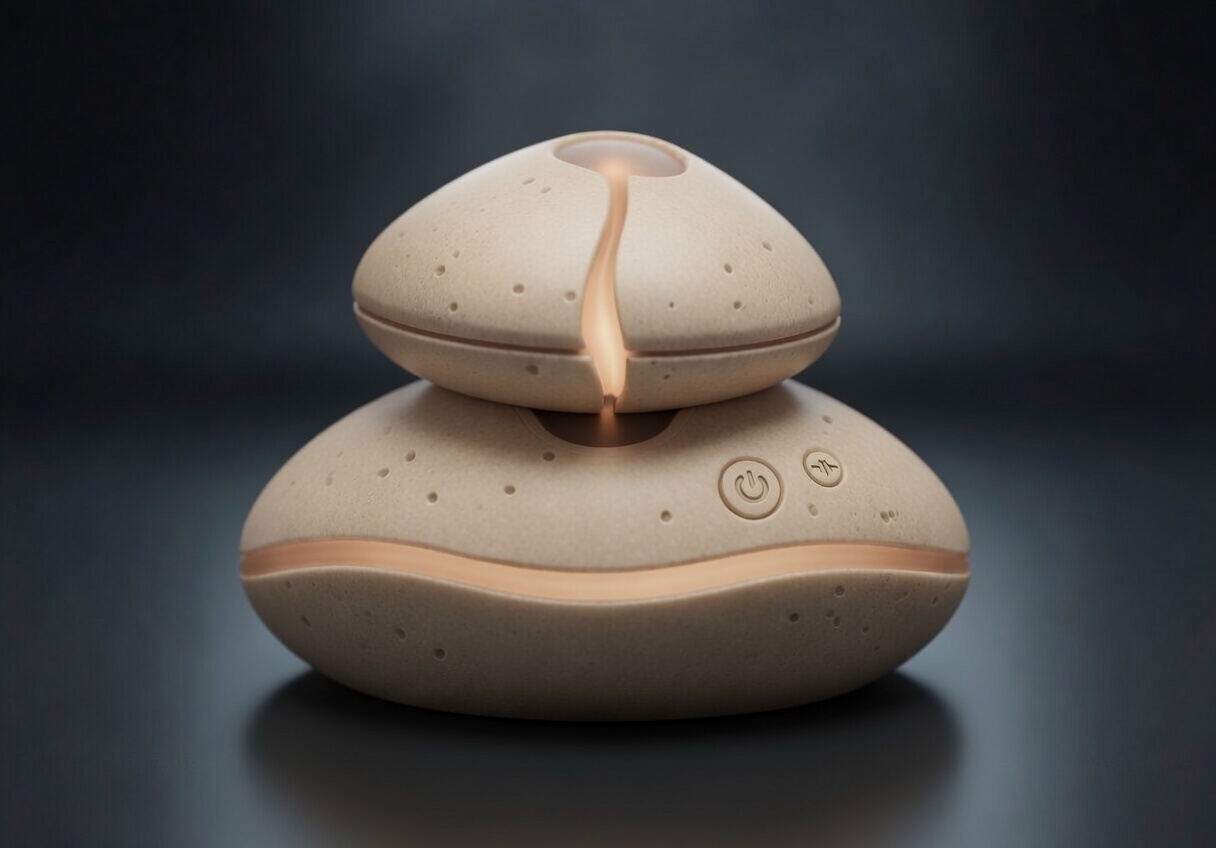
Offlo is a sleep-oriented product concept: a stone-shaped bedside companion designed to help people settle a busy mind before sleep, with an app for returning to their thoughts later.
The physical object is central to the experience. Its natural form, material character and soft light establish a calmer bedside presence. My teammates led the physical product; my primary contribution was the UI/UX connecting the night-time ritual with the morning review.
This digital refinement keeps that relationship intact. The phone offers an alternative capture route, while the original stone remains the intended bedside companion.
A physical place to put the day down
The original stone, droplet and ripple are one connected idea: a thought lands somewhere outside the mind. The logo carries that idea into the digital companion.
The same thought. A different moment.
Day and night change more than the background. The amount of information, the primary action and the point at which a person can leave all change with the moment.
01 / At night
Capture asks for words, not categories. Saving ends with a reassuring receipt and “Done for tonight”, without a prompt to organise the next day.
02 / In the morning
The original thought remains visible. A possible action is a separate decision, with room to edit the wording, choose a day or leave it as a thought.
The original team materials contain night and morning screens, voice records, transcripts, suggested steps and scheduling. This 2026 refinement adds explicit capture controls, a written fallback, a saved stopping point, searchable records and reversible planning. These are design proposals, not findings from a new user study. The browser does not connect to the bedside object or generate AI advice.
A working journey, at your pace.
Leave a written thought, or explore a sample morning. Find the thought, choose one step and try completing, removing or restoring it. Voice capture is optional and only begins after you allow your microphone.
This preview keeps text and optional audio in this tab only; reload clears them. Nothing is uploaded. No hardware, transcription or AI service is connected.
The journey includes the moments that are easy to leave unfinished: a paused recording, a failed permission request, an empty plan and a changed mind.
Interface collection / tap to enlarge
The original stone, droplet and ripple symbol stays intact. Its forms inform the supporting illustrations, while reading surfaces stay quiet. Day and night colours support different moments without replacing the identity.
Less to hold.
More room to begin.
Clear words. Deliberate choices.
Reflective serif headings; clean sans-serif reading and controls. The Figma library uses Lora and Manrope. Mobile content follows a consistent spacing scale, with controls sized for touch.
Material 3 foundation reference ↗Filled actions communicate the next step. Outlined and text actions keep alternatives visible without competing for attention.
Labels, icons, selection indicators, helper text and focus outlines communicate what changed. Errors include a usable next action.
Stable navigation, comfortable touch targets, readable surfaces and reduced-motion support carry across both themes.
Design decision
The saved state deliberately closes the night-time interaction. In the morning, keeping a thought is as legitimate as choosing a task. Removing a thought also explains what happens to its linked steps, with an undo route.
Next validation
Next I would observe whether people understand what is saved, can return to the same thought, and feel free to defer an action. I would also compare bedside capture with the phone fallback. These studies have not been run for this iteration.
Graduate team project. My primary contribution is UI/UX; teammates led the physical product. Sample thoughts and plans illustrate the interaction. The logo and stone concept render come from the original project’s Figma board. The render illustrates the product concept; it is not evidence of a manufactured device. No sleep improvement, working bedside connection or AI efficacy is claimed. Supporting sleep is the design intent, not a measured outcome. The 2026 portfolio revisit uses AI-assisted interface refinement and presentation production under my direction. No launch or measured usability improvement is claimed.